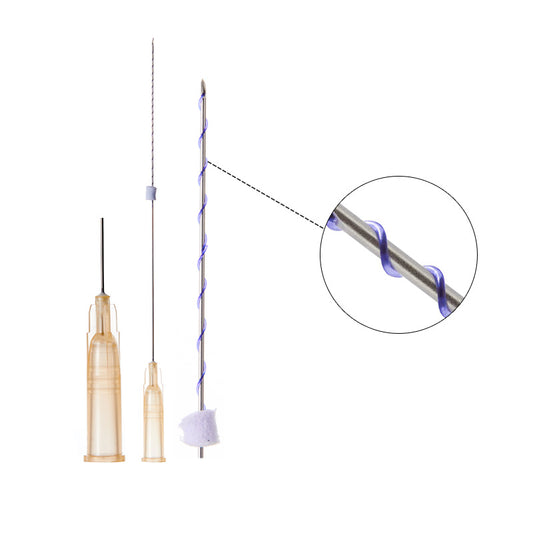
What is the primary histological mechanism of Polydioxanone (PDO) Mono threads?
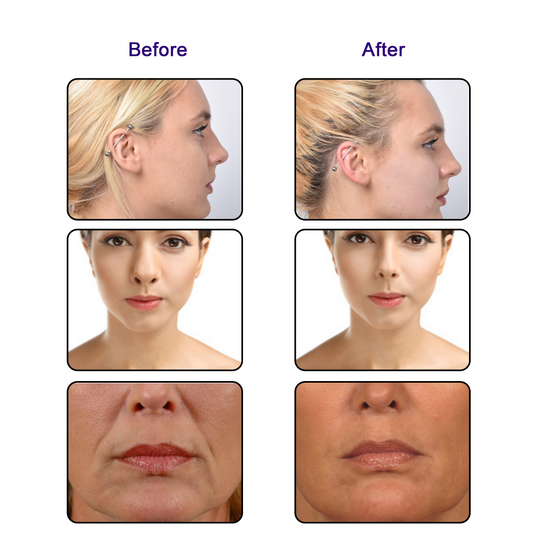
PDO Mono threads function as a potent biostimulator for non-surgical tissue rejuvenation. Once inserted into the sub-dermal layer, the polydioxanone thread benefits are realized through neocollagenesis. As the material undergoes hydrolytic degradation over 180 days, it triggers fibroblasts to synthesize Type III collagen, resulting in visible skin tightening and increased dermis redensification.
How to select the optimal needle gauge and length for different anatomical sites?
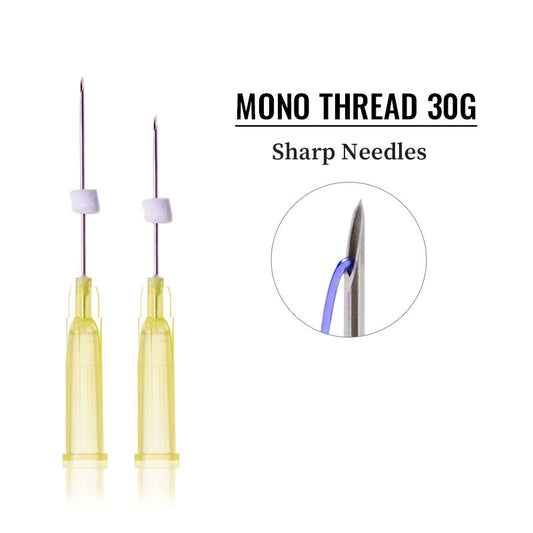
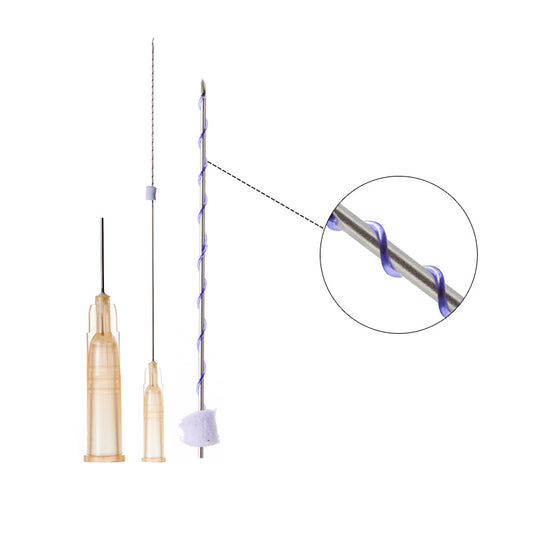
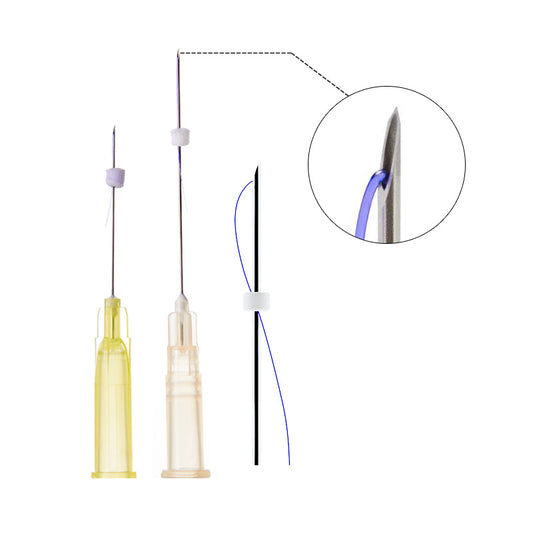
Selecting the correct PDO mono thread specification is vital for clinical efficacy and patient safety. For the periorbital (eye) area and brow lift, the professional standard is 30G 25mm or 30G 38mm to minimize trauma. For larger areas requiring a stronger scaffold, such as the cheeks and submental region, a 29G 50mm or 26G 60mm/90mm specification is recommended to address higher skin laxity.
What is the recommended "Mesh Technique" for cheek and jawline rejuvenation?
The mono pdo thread cheek technique utilizes a cross-hatch or grid formation to maximize the surface area for collagen production. Inserting 10 to 20 threads per side creates a structural matrix that increases skin density. This is widely considered the best pdo thread for cheek treatment when the goal is preventing sagging and improving the V-line envelope without mechanical lifting.
Why is high tensile strength a critical safety indicator for PDO sutures?
In clinical practice, avoiding thread snap or breakage is essential. Premium threads must exhibit high tensile strength and flexibility to withstand the pressure of the injection technique, especially in ultra-fine 30G 38mm models. Maintaining polymer integrity ensures a higher patient satisfaction rate and minimizes post-procedure complications like migration.
What quality and safety certifications are required for professional clinic supplies?
To ensure clinical excellence and pdo thread safety, all supplies should be CE Marked. Sterile integrity is maintained through medical-grade, vacuum-sealed packaging, ensuring each polydioxanone thread is pyrogen-free and chemically stable until the point of use.
What is the typical clinical results timeline for smooth thread procedures?
While the physical thread is absorbed via hydrolysis within 6 months, the results from the induced collagen scaffold persist much longer. Most patients experience a continued skin tightening effect for 12 to 15 months. Understanding this pdo thread results timeline is necessary for clinicians to manage expectations and plan appropriate maintenance sessions.
Can PDO Mono threads effectively treat horizontal neck and necklace lines?
Yes, PDO mono threads for neck rejuvenation are a standard clinical protocol. Using 27G 50mm or 26G 60mm threads allows for the treatment of submental laxity and fine horizontal lines. The sustained collagen stimulation firms the thin skin of the neck area, providing a natural, smooth appearance.
What are the best storage protocols to maintain the shelf life of PDO material?
PDO is highly sensitive to moisture and storage temperature. To prevent premature degradation, threads must be kept in a cool, dry place. Adhering to strict shelf life monitoring is a vital part of clinic management, ensuring the thread maintains its optimal biostimulatory capacity and safety profile.